

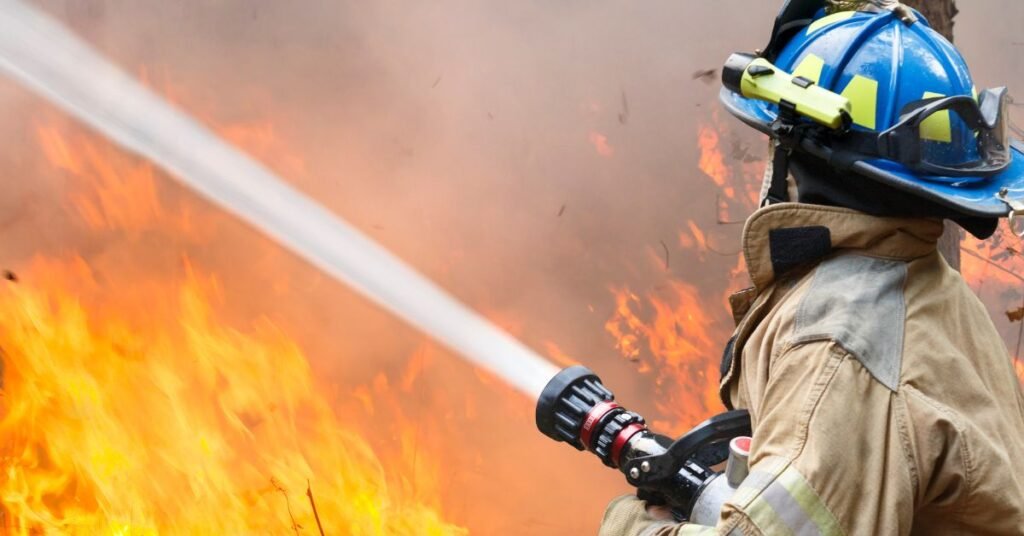
As the Widemouth 2 Fire continues to grow across Millard County, forcing evacuations and threatening communities, thousands of Utahns are asking the same questions. Why are these fires getting so large? Why do they seem harder to stop? And is there anything we could be doing differently?
This isn’t just another bad fire season. According to the Utah Division of Forestry, Fire and State Lands, 2026 has already become the second-highest year on record for total wildfire acreage burned in Utah. These aren’t just numbers. They’re families leaving their homes, ranchers losing grazing land and livestock, businesses closing, and communities wondering what comes next.
There isn’t one simple explanation. Weather, drought, rising temperatures, invasive species, and more people living near forests all play a role. But I also think we’ve overlooked something that’s been quietly changing for decades: the way we think about forest management.
We’ve spent years treating “leave the forest alone” as the highest form of conservation. The idea came from a good place. We wanted to protect forests from overuse and avoid repeating mistakes from the past. But somewhere along the way, we started treating a healthy forest as one that’s been left untouched—a “pristine” landscape with as little human involvement as possible.
The problem is that western forests have never really worked that way.
These forests have always changed. Long before modern forestry, they were shaped by low-intensity fires, insects, storms, drought, wildlife, and, in many places, Indigenous stewardship. Those weren’t interruptions to nature—they were part of it. A healthy forest isn’t the one with the most trees or the least disturbance. It’s the one that’s resilient enough to handle stress and recover.
That’s why I think we’ve been asking the wrong question. Instead of asking how to leave forests untouched, we should be asking how to keep them resilient.
For much of the last century, active management—including responsible logging, thinning, road maintenance, and prescribed fire—helped reduce fuel loads while giving rural communities an economic stake in the health of nearby forests. Those practices weren’t perfect, and we’ve learned a lot since then. But as active management declined, we didn’t always replace it with other effective tools.
The result is that many forests have spent decades accumulating fuel. At the same time, drought has become more severe, insect infestations have increased, growing seasons have lengthened, and more homes have been built in fire-prone areas. A spark in an open, managed forest behaves very differently than one in a dense stand full of dry vegetation.
Regulations and lawsuits intended to protect natural resources have also made many projects slower, more expensive, and harder to complete. In too many cases, doing nothing became the easiest option.
But doing nothing is still a decision.
Forests don’t stop growing because we stop managing them. Dead trees stay where they fall. Young trees compete for water and sunlight. Brush continues to build. Eventually nature does the thinning for us, usually through the most destructive fires possible. Every summer we ask firefighters to face conditions that have been building for decades.
Most people never see what comes after a catastrophic wildfire. Once the smoke clears and the cameras leave, the damage is only beginning. The hottest fires can leave soils unable to absorb water. Streams fill with ash and sediment. Wildlife habitat changes dramatically. Invasive weeds move in. Entire watersheds can take decades to recover. Those long-term consequences often receive far less attention than the flames themselves, but they’re part of the true cost of catastrophic wildfire.
None of this means we should go back to the way things were decades ago, and it certainly doesn’t mean abandoning conservation. We’ve learned too much for that. But we’ve also learned that conservation and active stewardship aren’t opposites. In many cases, they depend on each other.
One opportunity I don’t think we’ve talked about enough is what we do with the material removed during forest restoration. Right now, dead trees, small-diameter timber, branches, and brush are often treated as waste. We pile it, burn it, or leave it until it becomes fuel for the next fire. But that same material could become compost, mulch, biochar, and other soil amendments that improve agricultural land, hold moisture longer, and reduce fertilizer needs.
We’ve got forests that need thinning, farms that need healthier soils, and rural communities that need good jobs. It seems like there ought to be a way to connect those needs. Imagine forest restoration creating local businesses instead of just slash piles. Imagine hazardous fuels becoming products that benefit agriculture while making forests safer at the same time.
I also don’t think every acre of forest needs to be managed the same way. Remote wilderness and forests surrounding towns, powerlines, municipal watersheds, and major roads don’t present the same risks. Prioritizing fuel reduction around communities and critical infrastructure won’t stop every wildfire, but it could give firefighters a much better chance of protecting lives and property.
Forests are always changing. The question isn’t whether they’ll change. It’s whether we’ll help shape that change through thoughtful stewardship or continue letting catastrophic wildfires make those decisions for us.
The Widemouth 2 Fire won’t be the last major wildfire Utah faces. But maybe it can remind us that resilience doesn’t happen by accident. Healthy forests aren’t defined by the absence of human involvement. They’re defined by their ability to endure, recover, and continue serving the people, wildlife, and landscapes that depend on them.
Submitted By Rod Hjelm