

A few weeks before Thanksgiving, I reached out to Sara Nasuta, the Turning Point USA leader here in Utah. I wasn’t calling with plans to start a chapter myself. My intention was simply to connect, encourage her by sharing positive examples from other communities, and explore whether she might affiliate with another organization I’m involved with.
During that conversation, she shared something that stayed with me. There are people—especially young people—who want to be involved in civic and political discussions but are afraid to put their names down as leaders. Many worry about the social cost, about being labeled, or about what participation might mean for their future.
I understand that fear, and I also know this: courage is not the absence of fear; courage is choosing to do what is right in spite of it.

That moment forced me to reflect on what we are asking of the next generation—and what we are failing to give them. More than anything, we are failing to give them space to see one another as fully human.
Public discourse today has been flattened into talking points and assumptions. Instead of listening, we categorize. Instead of understanding, we caricature. People are reduced to labels, and once reduced, it becomes easier to dismiss them, silence them, or treat them with contempt.
This kind of dehumanization often begins with convenience. We tell ourselves that it saves time or protects us from discomfort. What it actually does, however, is erode empathy, humility, and our ability to live alongside people we disagree with.
I believe allowing people to speak is always a benefit. Listening does not require agreement; it requires maturity. When we hear someone out, we gain insight into why they believe what they believe. We may still disagree, but we are wiser for having listened. These are not radical ideas, but are foundational ideas that many of us learned from good parents and earnest teachers.
And yet today, I watch people justify hostility—and even violence—while simultaneously calling for tighter restrictions on speech. That contradiction should concern all of us. Before we can fix anything, we must be willing to ask an uncomfortable question: What went wrong?
I’ve attended meetings hosted by organizations seeking to “educate” or reshape rural communities. Too often, these gatherings rely on scripts that describe how certain groups supposedly think. I’ve listened as neighbors were turned into caricatures. I left frustrated—not because of disagreement, but because of the absence of genuine curiosity.
Over time, I’ve learned a simple discipline that helps: bring a pen and notebook, write thoughts down, slow emotional reactions, and look for common ground—or at least honest understanding. Understanding does not require endorsement, but understanding makes hatred harder to sustain.
As the holiday season has been wrapping up, many people have been leaning into nostalgia—simpler traditions, handmade gifts, a desire for what once felt stable and humane. I don’t think this is accidental; I think it reflects a quiet resistance to what we are told must be the “new normal.”
I don’t want a new normal where slander, silencing, and social punishment are reframed as moral virtue. I don’t want a culture that teaches children that cruelty is acceptable if it is aimed at the “right” people. True kindness is being able to look at a neighbor—even one you disagree with—and genuinely wish them well.
I’ve watched fear, apathy and hopelessness take hold of many young people, but I’ve also seen how thin those layers are. Beneath them is a hunger for meaning, for honest conversation, and for spaces where disagreement does not result in exile.
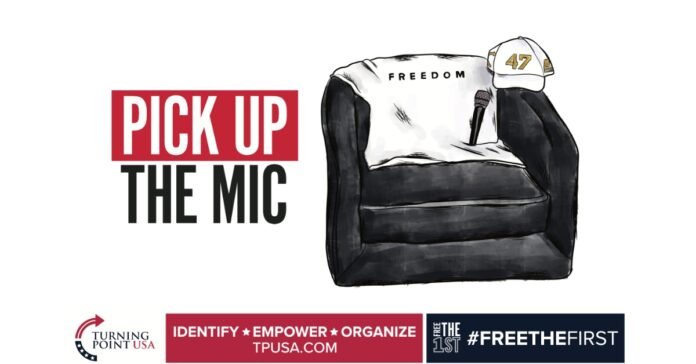
That is why I am starting a Turning Point USA chapter in our community, open to community members of all ages, beginning in ninth grade.
Turning Point USA is often misunderstood. At its core, its mission is to promote freedom, personal responsibility, and the open exchange of ideas. This chapter will not operate from a rigid script or demand ideological conformity. Instead, it will provide a structured but open environment where people are encouraged to think, listen, and speak freely.
Meetings will follow a simple format. Participants respond to statements by moving to signs labeled agree, disagree, strongly agree, or strongly disagree. People may speak if they choose or simply listen. Differing viewpoints are expected. Respect is the standard.
What I’ve seen in these environments is striking. People don’t want to leave. People stay because they feel heard, because they are treated as capable thinkers, and because disagreement—perhaps for the first time—feels safe.
We are living in a moment when people are being pulled toward emotional reaction, something history shows can destabilize entire societies. The antidote is not silence. The antidote is cultivating thinkers.
Hope comes from freedom. Freedom grows from genuine respect.
That is the purpose of this Turning Point USA chapter—and why I believe this work matters for the health of our entire community.
Submitted by Cari Bartholomew