


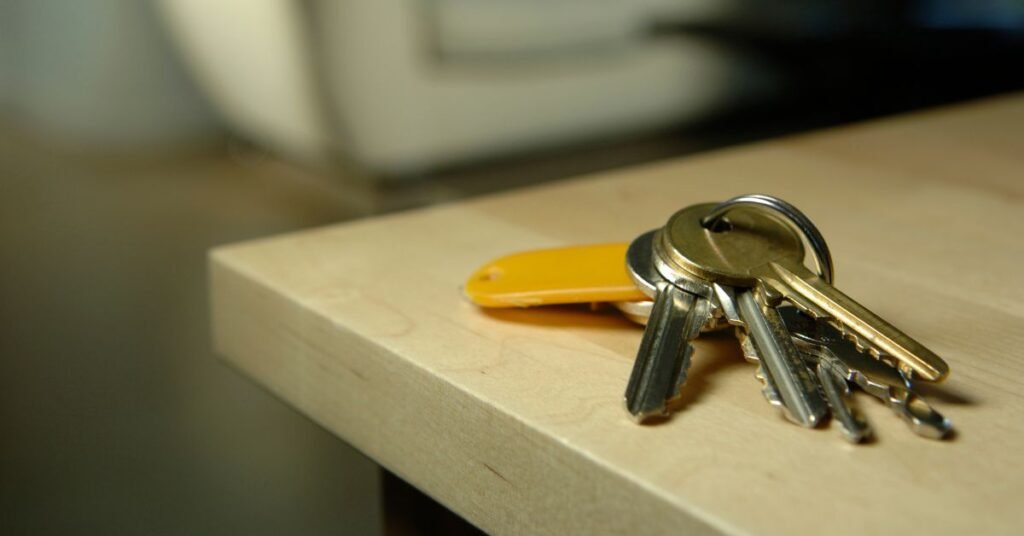
Ask someone who grew up in the 1970s, 1980s, or early 1990s what it meant to be a latchkey kid, and chances are they’ll smile before answering. They remember walking home from school with a house key around their neck, tucked into a backpack, or hidden in a pocket. Mom and Dad were still at work. The house was empty. For the next hour or two, they were responsible for themselves.
For millions of children, this was simply normal life. There was no cell phone to check in with. No GPS tracking. No text messages asking, “Did you make it home?” You unlocked the front door, made yourself a snack, finished your homework if you were responsible enough, and waited for your parents to come home.
Looking back, it is easy to romanticize that era or criticize it. The truth, as with many things in life, probably lies somewhere in the middle.
Growing Up a Little Faster
One of the defining characteristics of being a latchkey kid was learning independence at an early age. There was no adult standing nearby to remind you to finish your homework, unload the dishwasher, or stay out of trouble. You learned quickly that your decisions had consequences.
For many children, this fostered confidence. They learned how to solve small problems on their own. They learned to make a sandwich, clean up after themselves, manage their time, and entertain themselves without constant supervision. These may seem like small accomplishments, but together they created something valuable: self-reliance.
Many adults who grew up this way still credit those afternoons alone with teaching them responsibility long before they entered adulthood.
Freedom Came With Responsibility
The freedom of being home alone also came with expectations. Parents trusted their children to make good decisions. In return, children learned that trust could be earned or lost.
That trust often became a powerful motivator. Most latchkey kids knew the rules before their parents left for work. Don’t answer the door. Finish your homework. Stay inside. Call if there’s an emergency. The expectations were simple, but they carried weight.
Perhaps one of the greatest lessons was learning that freedom and responsibility belong together. One without the other rarely works well.
That lesson continues to apply throughout adulthood. Whether it involves finances, careers, relationships, or parenting, greater freedom almost always requires greater personal responsibility.
The Benefits That Lasted a Lifetime
Many former latchkey kids describe themselves as resourceful. When something went wrong, there wasn’t always an adult immediately available to fix it. They learned to think through problems before asking for help.
They also became comfortable with solitude. Today’s world is filled with constant entertainment and endless notifications, but many latchkey kids learned how to be alone without feeling lonely. They read books, built forts, rode bicycles, invented games, or simply sat and thought.
Creativity often flourished because boredom was not immediately solved with a screen. Imagination filled the gaps.
Perhaps most importantly, they developed confidence that they could handle life. Every small problem they solved became evidence that they were capable.
The Other Side of the Story
Of course, not every latchkey experience was positive.
Some children experienced loneliness. Others carried anxiety that no one recognized at the time. Emergencies felt larger when there was no adult nearby. Some children took on responsibilities beyond what was appropriate for their age, caring for younger siblings or managing household tasks while their parents worked long hours.
For some, independence arrived before emotional readiness.
There is also the reality that many parents were not absent because they wanted to be. They were working to provide for their families. Rising costs, single-parent households, and demanding work schedules often left families with few alternatives.
Looking back with today’s standards can make it easy to judge yesterday’s decisions. It is often more helpful to understand the circumstances people were navigating.
What Today’s Parents Can Learn
Whether or not children are ever left home alone today is almost beside the point. The bigger lesson is about independence.
Modern parenting often leans toward constant supervision. Children have organized activities, scheduled playdates, smartphones, and immediate access to parents throughout the day. While many of these changes improve safety, they also reduce opportunities for children to develop confidence through solving problems on their own.
Learning independence does not require an empty house. It requires opportunities to make decisions, experience consequences, and build confidence without someone stepping in immediately.
Children grow when they are trusted with responsibilities appropriate for their age.
Something to Consider
Perhaps the biggest question isn’t whether being a latchkey kid was good or bad. Perhaps the better question is what children need most as they grow into capable adults.
Every generation tends to react against the one before it. Some parents who grew up with too little supervision became highly involved parents. Others who felt overprotected intentionally gave their children more freedom. Both approaches usually come from love.
The challenge is finding balance.
Children need protection, but they also need opportunities to become capable. They need guidance, but they also need room to struggle. They need support, but they also need the confidence that comes from discovering they can solve problems without someone rescuing them every time.
The goal of parenting has never been to raise children who always need us. It has always been to raise adults who no longer do.
The Wrap Up
Being a latchkey kid was more than simply coming home to an empty house. For many people, it became an unexpected classroom where responsibility, independence, creativity, and resilience were quietly developed one afternoon at a time.
That experience was not perfect, and it certainly was not the right fit for every child or every family. Some children thrived, while others struggled. Like most aspects of life, the experience existed somewhere between hardship and opportunity.
Perhaps the greatest lesson from the latchkey generation is that confidence rarely appears overnight. It is built one decision at a time, one problem solved at a time, and one small responsibility accepted at a time. Whether those lessons are learned in an empty house, on a sports field, in a classroom, or around the family dinner table matters less than ensuring they are learned at all.
After all, one of the greatest gifts we can give the next generation is not simply keeping them safe. It is helping them become capable.