

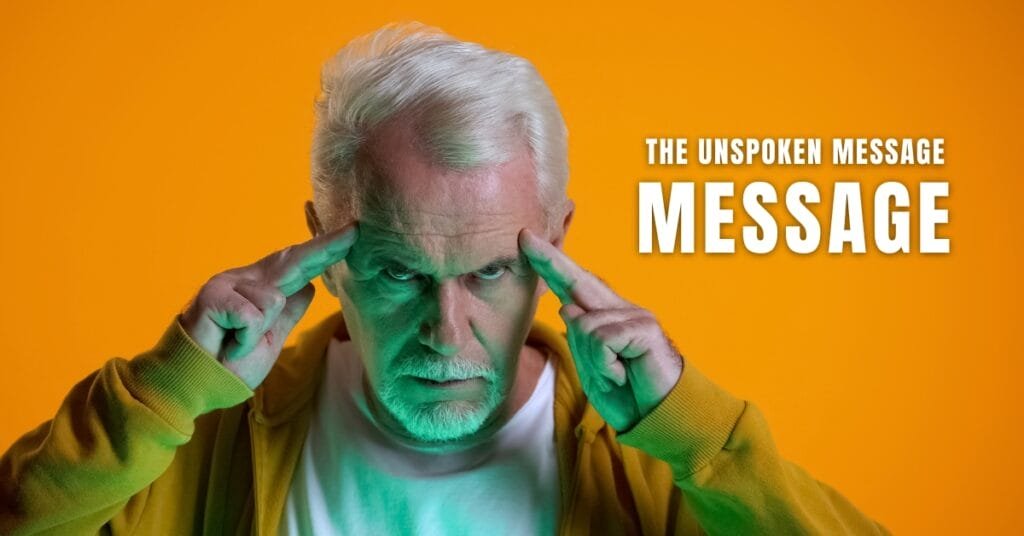
You don’t have to say a word to send a message. Most of the time, you’re already communicating long before your mouth opens. The way you raise your eyebrows, fold your arms, glance across a room, or even walk into a space says a lot about your mood, your intentions, and your feelings. This is nonverbal communication, and it plays a bigger role in our daily lives than we often realize.
Whether you’re in a meeting, hanging out with friends, or navigating a tough conversation with a loved one, the unspoken signals you give off can influence how people see you and how your message is received. Understanding nonverbal communication isn’t just a useful skill; it’s a tool that can improve relationships, avoid misunderstandings, and help you connect with others more authentically.
Everyday examples you already know
You’ve probably noticed how a genuine smile puts people at ease. It’s one of the simplest forms of nonverbal communication, and it works across cultures and languages. A smile can break the ice, express kindness, and signal openness. On the other hand, avoiding eye contact can suggest discomfort, insecurity, or even dishonesty. You may not intend it, but your eyes can say more than your words ever will.
Think about a job interview. If a candidate walks in slouched, avoids eye contact, and gives a weak handshake, they’ve already communicated something negative before answering the first question. Contrast that with someone who walks in with good posture, gives a firm handshake, and maintains steady eye contact. Their words might be similar, but their body language creates a completely different impression.
Parents and teachers use nonverbal cues constantly. A raised eyebrow, a pointed look, or a simple nod can communicate expectations, encouragement, or warning without interrupting a moment. Couples often rely on subtle gestures to communicate affection or to signal support when words might not be appropriate in the moment.
Knowing when to use it
Nonverbal communication is most effective when words would either feel unnecessary or might make a situation awkward. During emotional conversations, for instance, someone might be too upset to hear advice or explanations. In those cases, a gentle touch on the shoulder or simply sitting beside them in silence can be far more powerful than anything you could say.
In crowded or quiet places, like a church service or a theater, a knowing glance or a light tap can serve as a way to communicate without disrupting others. In social situations, you might signal your interest in a conversation just by leaning in, nodding along, or mirroring someone’s expressions. These small cues create a connection without needing to talk over each other.
Nonverbal communication is also useful when you’re trying to express support or empathy. If a friend is sharing something vulnerable, they’re often looking more for presence than feedback. A steady, calm posture, soft eye contact, and an occasional head nod can reassure them that you’re listening and that their words matter.
When silence sends the wrong message
While nonverbal communication is powerful, there are times when it can be misread or even harmful. If someone is expecting a verbal response and you remain silent, they might assume you’re angry, uninterested, or ignoring them, even if that’s not your intention.
In conflict, nonverbal communication can accidentally escalate tension. Crossing your arms, rolling your eyes, or turning away can come off as dismissive, even if you’re simply trying to stay calm. In romantic relationships, shutting down and relying too much on gestures or silence can leave your partner feeling confused or rejected. Some conversations need clear, direct words to clear the air and provide resolution.
At work, relying only on body language to signal disagreement or discomfort can lead to misunderstandings. People can’t always read between the lines, especially in professional settings where clarity matters. If you disagree with a plan or need to set a boundary, you’ll probably need to back up your expressions with thoughtful communication. Otherwise, your message might not be received at all.
Becoming more aware
One of the most helpful things you can do is to become more aware of your own body language. Notice how you carry yourself when you’re feeling confident compared to when you’re anxious. Pay attention to your facial expressions in conversations, especially when emotions are high. Are you giving eye contact, or are you glued to your phone? Are your arms open and relaxed, or are you closed off without realizing it?
You can also tune in to others more closely. Observe how someone’s posture shifts when they’re uncomfortable, how their tone changes when they’re unsure, or how their pace of movement slows when they’re feeling down. Being able to read these cues can help you respond more appropriately and offer the kind of presence that people actually need.
Nonverbal communication is about alignment. When your gestures, expressions, and tone match your words, your message comes across clearly and with sincerity. When they don’t match, people get confused or suspicious. Think about someone saying, “I’m fine,” through clenched teeth and a forced smile. Their body is telling you everything their words aren’t. Being in tune with both sides of communication helps prevent that mismatch.
Using it as a tool
Once you become more comfortable with nonverbal language, you can begin using it intentionally to shape your interactions. You might soften a tense conversation by keeping your voice calm and your hands relaxed. You could strengthen your leadership presence by making eye contact and standing with a strong, grounded posture. You may even build better friendships just by becoming someone who truly listens, nods, and shows care through their expressions.
There are also times when nonverbal communication can help you advocate for yourself. A quiet but steady look can hold boundaries without confrontation. A deliberate pause before responding can signal confidence. Choosing not to interrupt, while keeping your focus on the speaker, shows that you respect them and are engaged, even if you don’t agree.
In parenting, modeling healthy nonverbal cues can help children learn how to express emotions constructively. If you stay calm and grounded in a tough moment, they’re more likely to feel safe and heard, even before you explain anything.
When two people are on the same wavelength
One of the most remarkable things about non-verbal communication is how deeply it can connect people who understand each other. You’ve probably experienced a moment when you and someone else exchanged a glance, and without saying anything, you both knew exactly what the other person was thinking. It might have happened in the middle of a meeting, during a shared joke across a crowded room, or in a situation where saying the wrong thing out loud would have made everything more awkward. That moment of silent understanding is more than a coincidence. It’s nonverbal fluency.
When two people are on the same wavelength, they become finely tuned to each other’s expressions, posture, and tone. They notice the micro-expressions that others miss. They can have entire conversations through eye contact, subtle gestures, and shared timing. This kind of connection takes time and trust to build, but once it’s there, it becomes an almost effortless way of communicating. Friends who know each other well, siblings, partners, or coworkers who’ve collaborated for years often develop this kind of shorthand. A quick eyebrow raise can mean “Did you see that?” while a quiet sigh might say “Let’s get out of here” without needing to say a single word.
This unspoken communication creates a powerful bond. It reduces the need for explanation, clears space for efficiency, and can even act as a safety net in emotionally charged or high-stakes situations. Being able to read and be read on that level makes people feel seen and understood. It brings a quiet kind of intimacy and strengthens relationships in a way that spoken words sometimes can’t match.
Of course, this kind of mutual understanding doesn’t just happen by chance, but is built on awareness, attention, and the willingness to truly tune in to the other person. When both people are present and attuned to each other’s nonverbal cues, communication becomes something more than just a tool; it becomes a shared language that often speaks louder than words.
Even more fascinating is when this kind of connection happens between strangers. It might be brief, but it’s real. Maybe you’re standing in line somewhere, and you lock eyes with someone during a strange or funny moment, and without a single word, you both smile in agreement. Or perhaps you’re in a tense situation—like an airport delay or a crowded elevator—and you and a stranger share a silent glance that says, “Yep, this is ridiculous.” These moments are small, but they reveal something powerful: when people are present and open, they can quickly pick up on each other’s emotional signals and fall into a kind of unspoken rhythm.
It’s a reminder that communication isn’t just about long histories or shared language. Sometimes, it’s about being attuned to the moment and paying close enough attention to truly connect, even if just for a second. That kind of nonverbal resonance can turn strangers into allies, even if only for a passing moment.
The wrap up
Communication isn’t just about what we say; it’s about how we show up. Nonverbal communication is constantly shaping how we’re perceived and how we relate to others, whether we’re aware of it or not. Learning to recognize these cues in ourselves and others can improve everything from our personal relationships to our professional lives.
There’s no single rulebook for getting it right, but becoming more mindful of your body language, your tone, and your presence is a great place to start. When used with intention and empathy, nonverbal communication can become one of your most powerful tools for connection. In a world full of talk, sometimes it’s the unspoken moments that mean the most.