


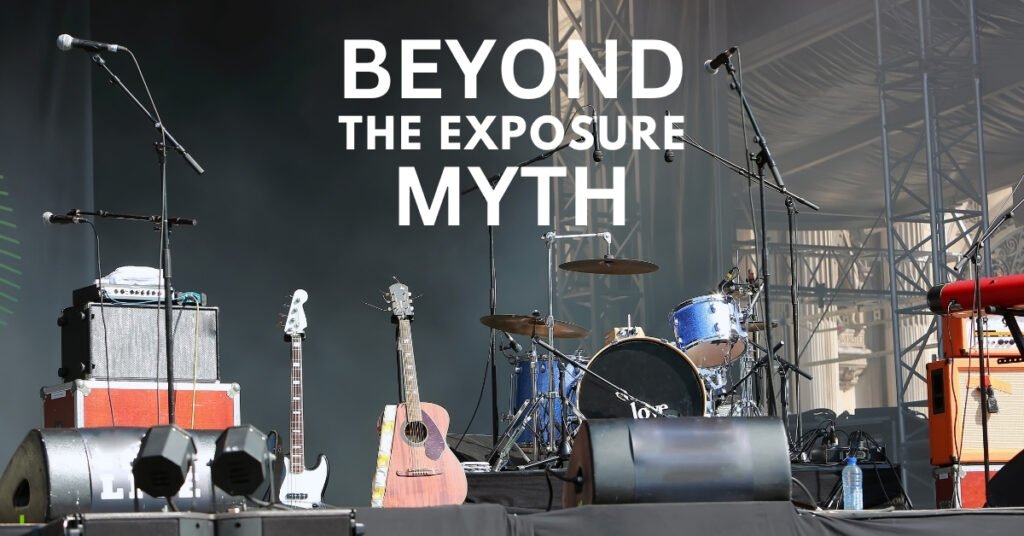
In any vibrant town, live music is treated as the heartbeat of the community. We love the atmosphere a local band brings to a Friday night or the energy of a summer festival. But behind the scenes, there is a sobering reality: The music industry has built a modern economy that relies on the musician’s deep-seated, psychological need to perform.
For the artist, playing isn’t just a career choice; it’s a drive. However, in today’s landscape, that passion is often weaponized. It’s time we look at the training, the labor, and the “soul-tax” we demand from our artists compared to every other professional in our community.
The Training Gap: Degrees vs. Decibels
When we hire a plumber or a lawyer, we respect their years of specialized training. We understand that their rates reflect a decade or more of study and certification.
Now, consider the professional musician. Their journey usually begins with childhood lessons, followed by years of school programs and, often, university or conservatory degrees. By the time a musician steps onto a local stage, they likely have more “on-the-job” training hours than almost any other professional in the room.
Yet, when that same musician arrives at a venue, the economic expectation shifts. We would never ask a lawyer to “work for exposure” or an electrician to work for “tips and a drink ticket,” but for the musician, these are standard offers. There is a fundamental disconnect between the value of the artist’s education and the compensation offered by the industry that profits from it.
The Myth of “Exposure”
The most common currency in the music scene isn’t the dollar; it’s “exposure.” Promoters and venues frequently expect musicians to volunteer their time to “get their name out there.”
But “exposure” doesn’t pay for a $3,000 instrument, a $500 amplifier, or the gas to get to the gig. By framing professional labor as a volunteer opportunity, the industry exploits the artist’s need to be heard. This creates a “race to the bottom” where skilled professionals are pushed out by those who can afford to work for free, devaluing the craft for everyone.
Musicians as an Unpaid Marketing Department
In almost any other industry, the business owner is responsible for bringing in the clients. A restaurant owner hires a chef to cook; they don’t expect the chef to bring 50 hungry people with them.
In music, this logic is often reversed. Musicians are expected to bring their own audience to the employer (the venue). They are tasked with self-promotion and social media management just to secure a booking. When a venue does this, they are offloading their entire marketing budget onto the artist. If the room is empty, the musician is blamed; if it’s full, the venue keeps the bar profits while the artist walks away with a small “cut of the door” that rarely covers their expenses.
The Merchandise Trap
Perhaps the clearest sign of a broken system is the rise of the “Merchandise Economy.” Because streaming payouts are negligible and gig fees have stagnated, musicians have been forced to become retail merchants. To make a living, a creator must resort to producing and selling t-shirts and hats at their shows.
It is a strange reality. We are asking our most talented creators to become clothing retailers just so they can afford to remain musicians. This shift focuses on the quality of a hoodie rather than the quality of a song, distracting from the very art that makes the community vibrant.
The Toll on the Soul
Creating original art is an exhausting process. It requires emotional vulnerability, intense focus, and a significant “tax” on the artist’s well-being. To write a song that truly resonates, an artist has to dig deep into their own experiences.
When this emotional labor is met with indifference or exploitation, the result is burnout. We aren’t losing talented voices because they’ve run out of things to say; we’re losing them because they can no longer afford the financial and mental cost of being undervalued by the spaces that claim to “support local music.”
Finding a Path Forward
If we want to maintain a healthy local culture, we have to treat music as a profession. This starts with a few key shifts:
1. Guaranteed Base Pay: Venues should move away from”pay-to-play” models. A professional deserves a professional fee, regardless of how many drinks are sold.
2. Marketing Partnerships: Venues and promoters should take responsibility for drawing a crowd, viewing the artist as a partner rather than a customer-generator.
3. Community Support: As patrons, we should be willingto pay cover charges that go directly to the band. We don’t expect a free meal; we shouldn’t expect free entertainment.
The “psychological imperative” to perform is a gift to our community. It’s time we stop using that passion as an excuse to underpay the people who provide it. Let’s start valuing our artists for the essential, highly trained professionals they truly are.