
“Spirituality, faith, and personal belief shape our lives. In these galleries, artists from across Utah reflect on these influences. Through painting, sculpture, photography, and mixed media, these works explore deeply personal visions of sanctity, devotion, and transcendence. Together, they create a vibrant tapestry of Utah’s diverse spiritual landscape and remind us of our universal search for meaning and connection.”
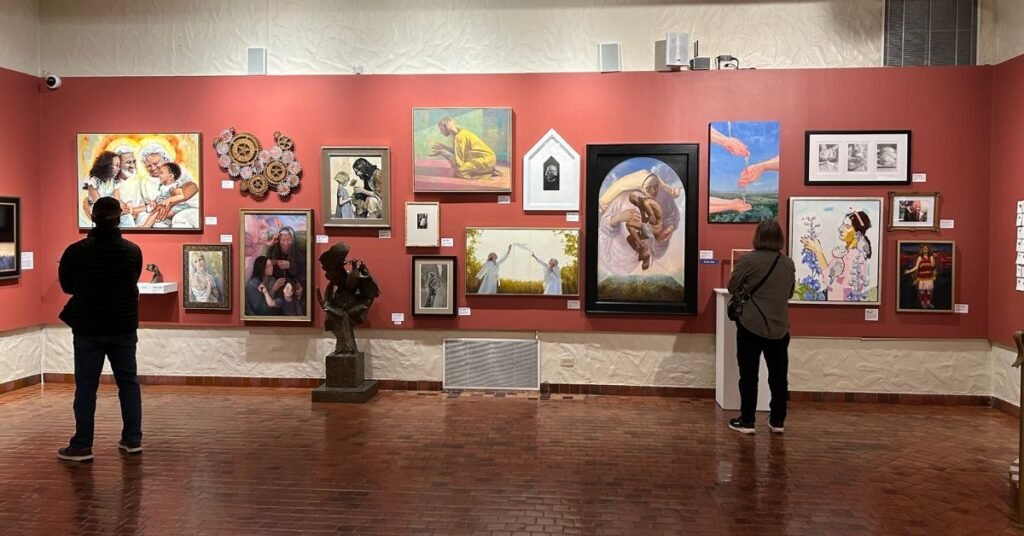
The above quote is part of the introduction that welcomes visitors to the newest exhibition at the Springville Museum of Art, which includes 230 works of art that were chosen by Cris Baird and Peter Hay from 747 entries.
The introduction also suggests that visitors consider how “encountering others’ spiritual or religious experience [might] deepen empathy and strengthen community” as they make their way through the exhibition, which is a very timely and hopeful invitation in these times of political turmoil.
It is tempting to assert that virtually all art boils down to some sort of religious or spiritual inspiration and expression.
We have walked through many of the wondrous art galleries of great museums in Europe and the British Isles as well as America, noting how many of the art works (especially pre-1600) reflect religious themes and events — many of which had been commissioned by churches and religious patrons.
Recently, we again walked trails through the spectacular canyons of the Four Corners area to view petroglyphs and pictographs and kivas that reflected the religious beliefs of the Ancient Pueblo peoples. We have purchased Navajo pots, silverwork, and weavings directly from their makers, who took the time to share with us the spiritual significance of each item.
There is something truly providential about purchasing a Canyon de Chelly story bracelet from the silversmith who made it at the table he had set up by the stream flowing through that very canyon.
For those unfamiliar with the Springville Museum of Art, it was completed in 1937 by the Works Project Administration (WPA), and was built in a Spanish Colonial style. The museum is intimate and spacious, welcoming both to patrons and to the art works they come to see and ponder. It’s a wonderful place to escape social media, traffic, pollution, homework, deadlines, or whatever’s bothering you, and spend some quiet time renewing your soul by hanging out with some engaging works of art. You might even find a bit of inspiration there.
This new exhibit displays works of art that help us see others’ experiences with an expanded vision.
“The Torchbearers,” by Emma Earle, won Best of Show. This oil painting with a dark night scene shows the ten virgins from the Bible story who were ready to greet the Bridegroom by having their lamps ready. Earle states that a different translation uses the words “torch” rather than “lamp,” so her virgins, painted in the shadows, are bearing bright lights. Their torches shine and manifest faith individually and collectively. They will also manifest to the Bridegroom, Jesus Christ, that they believe, and they have prepared for his entrance.
Next to this painting is a photograph by Cooper Lott, titled, “Help Me Find the Way,” which shows a church classroom with chairs and tables stacked up next to a draped window. Lott said he uses his art to “examine bittersweet nostalgia, imperfect memories, and nuances often left behind after leaving a high-demand religion.” His photograph of a classroom after people have put away the furniture and exited explores the emotions experienced in leaving a religion.
Our spirits can soar with the ten virgins from the New Testament, and then our spirits can mourn with the sense of loss from another. Art can deepen our empathy and thereby strengthen our community.
The show organizers also ask visitors to reflect on how recognizing these differences in spiritual or religious practices inform your own.
Some of the artwork emerges from communities that are traditionally Navajo, or Diné. Eugene Tapahe’s Ch’é’étiin (Portals), which was awarded the Award of Excellence, has geometric panels created with sand harvested with care and sacredness from Canyon de Chelly in Arizona and Coal Mine in New Mexico, the artist’s homeland and ancestral lands. He uses “art and healing to connect communities and honor Mother Earth.”
Sometimes the idea of the art is as important as the implementation of the art.
Howard Fullmer won the Award of Excellence for his mixed media representation of this scripture, also the title of his piece: “And the second is like unto it, thou shalt love thy neighbor as thyself. Matthew 22:39.”
We also imagine an allusion to the second amendment. Fullmer plays on the implications of the scripture by creating a large number 2 with fired .22 caliber brass casings reclaimed from a nearby shooting range. He states that the material “intentionally prompts strong, and often conflicting, reactions,” which can create barriers to our fulfilling the second commandment.
Art can present conflict, juxtaposing items that seem to oppose each other, and yet the artist directs us to make unexpected connections.
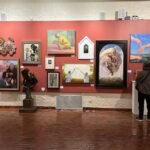
The exhibit includes sculpture cast in bronze, embroidery, a collage of four-leaf clovers, watercolors, oil paintings, industrial sculpture, stone art, tarot cards, drawings, 3-D art, and other creative media, all presenting spiritual and religious expressions. The show, which fills the main floor of the museum, will be running until January 13, 2027.
Submitted By Delys and Phillip Snyder