

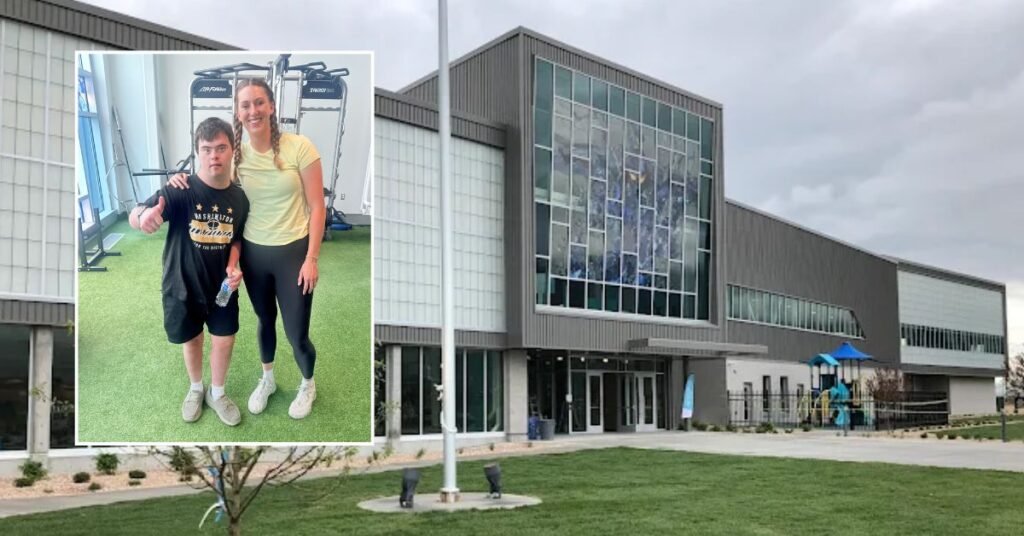
When Lauren Schofield leads an adaptive strength class at the Clyde Recreation Center, she’s doing more than teaching lunges, squats, and bicep curls. She’s helping create the kind of place she hopes her own daughter will someday call home.
Schofield’s 4-year-old daughter has Down syndrome, and while the little girl is still years away from joining a fitness class, she has already inspired her mother’s newest venture. After teaching traditional strength classes at the recreation center, Schofield noticed something missing.
“I had the idea that we don’t have a lot of classes for individuals with disabilities,” she said. “My biggest inspiration is my daughter. I just want to create these classes so that when she grows up, she can have these classes available to her.”
That vision has become reality with adaptive strength, a new class offered at the Clyde Recreation Center that welcomes participants of all abilities. The program focuses on building strength, confidence, and friendships in an environment where everyone can feel included.
A typical class begins with a warm-up before moving into games and strength exercises using dumbbells, medicine balls, aerobic steps, agility ladders, and other equipment. Movement is woven into playful activities that make exercise feel less intimidating and more enjoyable.
“I just like to make it fun with movement,” Schofield said. “Exercise and movement is fun.”
What makes the class unique isn’t the equipment; it’s the flexibility behind every workout.
Schofield plans each class around the people who attend, adapting exercises to fit every participant’s ability. If someone uses a wheelchair, she has upper-body alternatives ready. If another participant needs a different approach, she’ll modify the movement while keeping everyone involved in the same activity.
“I want it to mimic what everyone else is doing so they don’t feel left out,” she said.
That philosophy shapes every aspect of the class. Rather than asking participants to fit a predetermined workout, the workout is designed to fit them.
Although the class currently averages five or six participants, Schofield sees the smaller size as an advantage. It allows her to spend more time helping each person with proper form while building personal connections with everyone who walks through the door. At the same time, she hopes more families discover the program as word spreads throughout the community.
For Schofield, the physical benefits are only part of the story. She hopes participants leave healthier, but she also hopes they leave feeling welcomed, accepted, and excited to return.
“I hope that they can come and feel like they can be welcomed and come to an inclusive environment, make friends, but then also just be healthier and find love in moving their bodies,” she said.
Those goals have already made an impact on local families. Janae Wright, whose son attends the class, has seen firsthand how much it has meant to him.
“The class is so great,” she said. “These kids are becoming so physically fit, and it helps them not only physically but mentally. It has been such a good thing for my son. I’m so thankful for Lauren and the preparation and effort she puts into these classes.”
Feedback like that reminds Schofield of why the class has quickly become so important for her.
“I just enjoy the people,” she said. “They make my day. Those are my favorite classes to teach, and I always leave feeling fulfilled.”
Ultimately, adaptive strength is about more than lifting weights. It’s about removing barriers that have too often kept people with disabilities from feeling comfortable in traditional fitness settings.
Schofield wants families to know there is a place where everyone belongs, regardless of experience or ability.
“I just want people to realize that there’s classes out there for everybody,” she said. “I just want people to realize that there’s classes that they can come to and they can feel included in that environment.”