

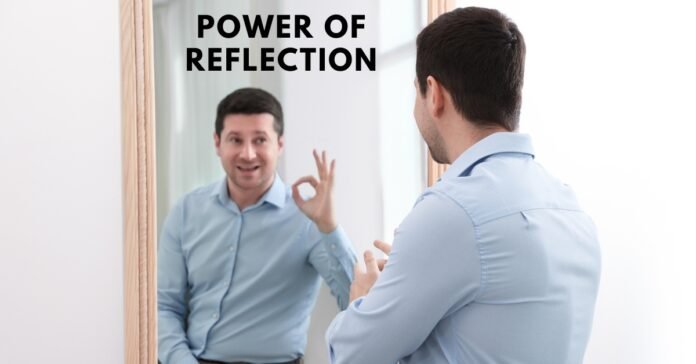
We look in mirrors every day. To fix our hair. Check our teeth. Make sure there’s not something weird going on with our outfit. But mirrors aren’t just for appearances; they reflect back more than a face. They’re a tool—one we don’t always want to use, but probably should.
Mirrors show us what others see on the surface, sure. But they also ask a quieter question: Can you look yourself in the eye? That one’s not about your outfit. That one’s about your life.
What mirrors actually reflect
At first glance, mirrors reflect the physical. They show you how your body shows up in the world. They give you feedback—sometimes helpful, sometimes brutal. But that’s only the beginning.

The longer you hold your gaze, the more a mirror reflects something deeper. Call it your conscience, your truth, or just your awareness. If you pause long enough, mirrors become less about how you look and more about how you’re living.
And that’s the real power of the mirror. It doesn’t care about filters or opinions; it shows you what’s there, not what you wish was there.
Living a life you can stand to look at
There’s this moment we all have—sometimes late at night, sometimes early in the morning—where we look in the mirror and ask, “Am I okay with who I am?” Not who people think you are, or who you post online, but who you actually are.
The truth is, we all make mistakes. We all fall short. That’s not the issue. The issue is whether you’re living in a way that aligns with your values, your integrity, your personal compass.
The real goal isn’t perfection; it’s peace. Peace with your decisions. Peace with how you treat people. Peace with how you carry yourself when no one’s watching. That peace starts with being able to meet your own gaze without flinching.
A quick mirror test
Try this. Stand in front of a mirror. Don’t fix your hair or adjust your shirt. Just look at your own eyes and ask:
Am I proud of how I showed up today?
Did I speak the truth, even when it was hard?
Did I treat people the way I’d want to be treated?
Did I stay true to myself?
You don’t need a journal or a therapist (though both are great). All you need is that moment of reflection that tells you more than you think. It’s humbling. It’s honest. And sometimes, it’s the start of change.
Mirrors help you understand how others see you
This part isn’t about approval or vanity; it’s about awareness. People respond to your energy, your words, your habits. You might not realize how you come across until you take a hard look in the mirror—especially when your facial expressions, posture, or tone send a message your words don’t.
Want to know why a friend keeps their distance? Or why doesn’t someone feel safe opening up to you? Sometimes, you can figure it out just by watching yourself in the mirror during an honest conversation or a tough moment.
Mirrors don’t have emotions. They don’t sugarcoat. They show you exactly what you’re projecting. And when you know how you come across, you can take ownership of it. That’s power. That’s maturity. That’s growth.
Mirror vs. ego
The ego wants to be seen a certain way. It wants applause, validation, and control. The mirror couldn’t care less about any of that. It won’t flatter you. But it will show you what’s real.
There’s a freedom that comes when you drop the performance and meet yourself as you are. No pretending. No spin. Just the truth. You can’t fake being at peace with yourself. But you can build toward it.
Mirrors and relationships
How we show up in our relationships often reflects how we see ourselves. If you struggle to trust others, chances are, there’s some inner work to do. If you demand perfection from people, maybe you’re doing the same to yourself.
Mirrors help you catch those patterns. They invite you to slow down and ask, “What am I bringing into this relationship?” Sometimes the answer is beautiful. Sometimes it’s a little uncomfortable. But either way, it’s honest—and that’s the best place to grow from.
And here’s the twist: when you become more aware of yourself, you start seeing others more clearly, too. You realize everyone has their own mirror moments, their own quiet doubts, their own inner struggles. That awareness builds compassion, and compassion is one of the best gifts you can bring into any relationship.
Practice in the mirror daily
You don’t have to turn every mirror glance into a spiritual awakening, but you can use mirrors as a small daily checkpoint
Take 30 seconds each morning or night to just look at yourself. No fixing. No judging. Just noticing.
Ask:
What energy am I bringing into today?
Is there something I need to take responsibility for?
What part of me needs kindness today?
The more you do this, the less you’ll rely on the world to tell you how you’re doing. You’ll start trusting your own inner signals.
When the mirror is hard to face
Let’s be real. There are days when the last thing you want to do is look yourself in the eye. Maybe you made a choice you regret. Maybe you hurt someone. Maybe you’re carrying shame, or fear, or disappointment.
Here’s the truth: even then, especially then, the mirror can be your lifeline.
Facing yourself doesn’t mean beating yourself up; it means owning what’s yours, learning from it, and giving yourself permission to move forward.
You don’t need to be flawless to be worthy of self-respect; you just need to be honest.
What the mirror can’t show you
Mirrors are powerful, but they’re limited. They don’t show your intentions. They don’t show your growth over time. They don’t show the inner battles you’ve fought quietly or the courage it took to keep going.
That’s why self-reflection needs to be paired with self-compassion. Use the mirror to see clearly, but also give yourself credit where it’s due. You’re not the same person you were a year ago. And you won’t be the same person a year from now.
The wrap up
Mirrors aren’t about punishment; they’re about presence. They help you see yourself more clearly so you can live more intentionally.
So the next time you catch your reflection, go beyond the surface. Ask yourself what kind of life you’re building, what kind of person you’re becoming, and whether that person is someone you respect.
If the answer is yes, keep going. If the answer is no, you’ve just taken the first step toward change; and that’s worth looking at.