
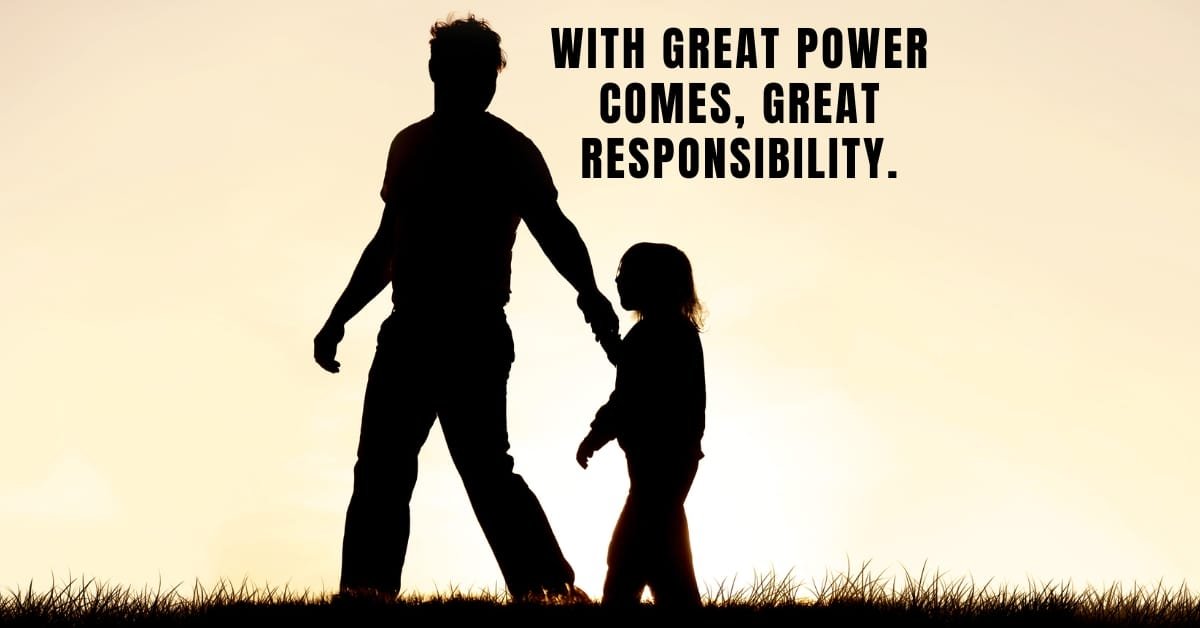
Most people first heard the phrase “With great power comes great responsibility” from a superhero movie. It’s one of those lines that stuck—partly because it came from Spider-Man’s Uncle Ben, and partly because it just feels true. It’s short, memorable, and has enough weight to make you pause. But what does it really mean? And more importantly, how does it show up in real life, far outside the world of comic books and web-slinging?
Whether you’re leading a team, raising kids, teaching a class, running a small business, or even just growing into your own sense of influence, this phrase still holds up. Power, in whatever form it takes, always brings a kind of pressure with it. How we handle that pressure is what makes the difference.
What does “power” actually look like?
When we hear the word “power,” our minds often jump to presidents, CEOs, or people on TV. But the truth is, power shows up in everyday life. It might be subtle, but it’s there.

If people look to you for answers, you hold power. If your words carry weight in someone’s life, you hold power. If your decisions affect other people’s comfort, safety, or success—even just a little—you’ve got power.
It can be as simple as being the one in charge of scheduling shifts at a job. Or being the older sibling that the younger ones look up to. Or having a platform online, no matter how small, where people listen to what you say. Power is not just about status, it’s about impact. If you can influence a situation, a group, or a person, then you’re in a position of power.
The responsibility part
The tricky thing about power is that it’s easy to enjoy the perks without noticing the responsibility that comes with it. That’s part of why Uncle Ben’s words hit so hard. Peter Parker didn’t realize his abilities could cause real harm until it was too late. And while most of us aren’t swinging between buildings or battling supervillains, the principle still applies. Power without thought can lead to real consequences.
Responsibility means taking ownership of how your choices affect others. It means asking hard questions before you act, like “Who might this hurt?” or “What am I not seeing here?” It means resisting the temptation to do what’s easiest or most beneficial to yourself, and instead thinking more broadly about what’s fair, just and kind.
It also means using your power to protect those who don’t have as much. If you’re in a position where you can speak up, make a change, or shield someone from harm, responsibility means not staying silent. That doesn’t always mean making grand gestures. Sometimes responsibility shows up in quiet, consistent actions—being fair, being honest, being willing to listen.
Everyday examples of power and responsibility
Think about a teacher in a classroom. Their words can shape how a student feels about themselves, their abilities, and even their future. A sarcastic comment might seem like no big deal, but to a kid trying to figure out who they are, it could land hard. On the flip side, a small encouragement might be exactly what that student needed to believe in themselves.
Or consider a manager at work. They don’t just assign tasks; they set the tone for how people are treated, what’s acceptable, and whether employees feel seen and valued. A manager who takes responsibility seriously can build trust and inspire growth, whereas one who doesn’t might create an environment full of stress and silence.
Even friendships carry this balance. If someone comes to you for advice, you’re holding a kind of power. What you say, how you respond, and whether you truly listen can affect someone’s next steps. That’s not something to take lightly.
Why it’s tempting to avoid the weight of responsibility
Let’s be honest. Responsibility isn’t always fun; it can feel like pressure. It means slowing down when you want to move fast. It means holding yourself accountable when no one else will. It means being aware of more than just your own needs.
There’s a reason so many people avoid it. It’s easier to shrug and say, “Not my problem.” It’s easier to pass the blame or say, “That’s above my pay grade.” And sometimes it’s scary. Doing the right thing might put you in conflict with others. It might make you feel isolated or uncertain.
Responsibility, when embraced, doesn’t weaken us; it strengthens us. It earns us respect, even when it’s quiet. It builds character in a way shortcuts never can. And over time, it makes us people whom others can trust
What happens when responsibility is ignored?
When power is used without responsibility, the effects ripple out. We’ve all seen examples of this, whether in the news or our own communities. Leaders who abuse their power, parents who manipulate rather than guide, influencers who care more about clicks than consequences. The harm often starts small but grows quickly.
And the fallout doesn’t only affect the people directly involved; it erodes trust. It teaches others to stay quiet or disengaged. It creates environments where people feel unsafe or undervalued.
Learning to handle power well
The good news is that you don’t have to be perfect to handle power well; you just have to be willing to be aware, humble, and thoughtful. That means being open to feedback. It means owning your mistakes. It means constantly checking in with your values and asking yourself if your actions are lining up.
It also means surrounding yourself with people who aren’t afraid to challenge you. People who will remind you of what matters when the pressure is high. Because the more power you have, the more important it is to stay grounded.
It helps to remember why you stepped into a position of influence in the first place. Most people don’t seek power just for the sake of it; they want to help. They want to contribute. They want to make something better. Responsibility is the path that keeps those goals intact.
The wrap up
Whether you’re a Spider-Man fan or not, Uncle Ben’s line has stuck around for a reason. It reminds us that having power, whatever that looks like in your world, isn’t just a privilege. It’s a calling.
It asks you to think beyond yourself. To move through the world with care. To recognize the ways you affect others, even when you don’t mean to. And to choose, again and again, to use your influence for good.
That’s what responsibility looks like. It isn’t flashy, and it doesn’t always come with recognition. But it’s what builds trust, creates impact, and sets the tone for the kind of world we want to live in.
So whether you’re leading a team, raising a child, or just learning to own your voice, remember that how you carry your power matters. And the more you use it with care, the more good you can do.