


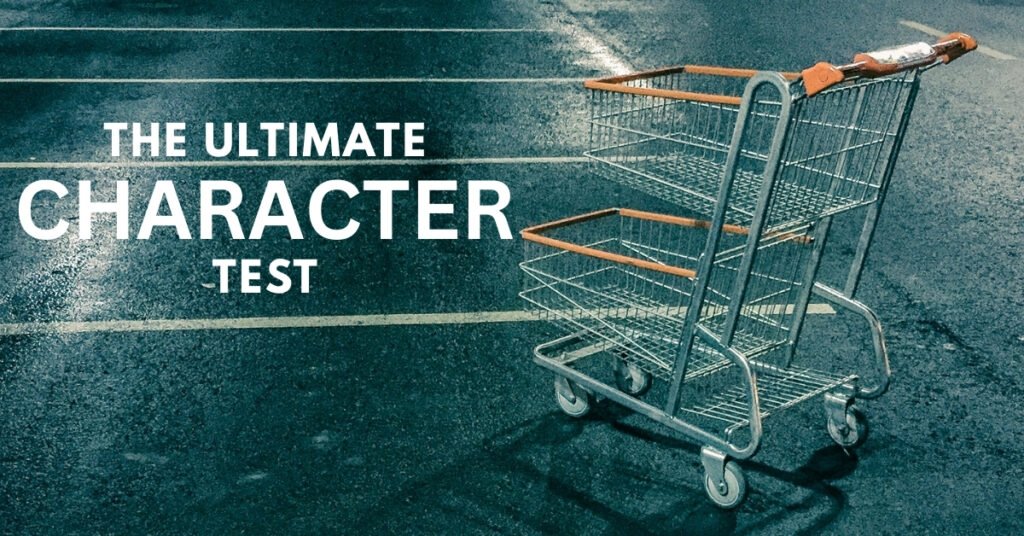
Most of us have had the moment. You load groceries into the trunk, close the hatch, and look down at the shopping cart like it is waiting for a verdict. Do you push it back to the cart corral, or do you leave it near a curb, a planter, or the empty space beside you and tell yourself it is fine?
This tiny decision has become a surprisingly big conversation online thanks to what people call the “shopping cart theory.” The basic idea is simple. Returning the cart is a small act that helps others and costs you very little. There is usually no reward for doing it, and rarely any direct consequence for not doing it. That’s why the theory frames cart return as a kind of everyday test of self-governance and personal responsibility. The version that spread widely in 2020 traces back to an anonymous post that went viral and then traveled through platforms like Reddit and Twitter.
Still, life is rarely that simple. The cart question sits at the intersection of courtesy, convenience, safety, disability, time pressure, and how we think about shared spaces. It can reveal something about habits and values, but it can also reveal the limits of internet moral tests.
The shopping cart theory and why it hit a nerve
The reason the shopping cart theory caught fire is that it feels relatable. Everyone has seen a stray cart drifting across a parking lot like a metal tumbleweed. Everyone has pulled into a spot only to find a cart sitting there like it owns the place. The theory argues that when a system relies on voluntary cooperation, your behavior in that moment says something about how you treat other people when nobody is watching.
The version of the theory most people quote, emphasizes that you gain nothing by returning the cart and you are not punished for leaving it. That’s the point. If you do the right thing without enforcement, the theory says, you are showing a kind of everyday integrity.
There is a reason that this framing feels powerful. Most of life is made of small choices, not dramatic hero moments. We build reputations in tiny, boring decisions like putting the cart back, holding the door, cleaning up after ourselves, and returning the borrowed thing in good condition. Even if nobody praises you, these moments shape how pleasant and safe public life feels.
Why people return their carts
For many people, returning the cart is just automatic. They do it because it feels like basic manners. They were raised to leave places better than they found them. They know abandoned carts can block parking spots, scratch cars, and create hazards for drivers and pedestrians. Some people return the cart because they know the cart crew already has plenty to do and does not need extra chaos added to their shift.
There is also a deeper, quieter reason. Returning the cart can feel like a small way of being the kind of person you want to be. Not the person you are when you are admired, but the person you are when you are tired, in a hurry, and nobody is paying attention.
Interestingly, some writing about the topic links cart returning with traits like conscientiousness — meaning, the tendency to follow through and take responsibility for small obligations. While plenty of online takes overreach, the general idea that habits of follow-through show up in public behavior, is part of why the meme resonates.
Why people don’t return their carts
This is where the conversation gets more honest and more human. People do not leave carts scattered around because they all woke up wanting to be villains in a parking lot.
Sometimes people are rushed, distracted, or stressed. Sometimes they are physically exhausted. Sometimes they are juggling kids and trying to keep everyone safe between moving cars.
Safety concerns, especially for caregivers, became a major flashpoint in the debate after a psychologist and mother went viral for saying she does not always return carts because she does not want to leave her children unattended in a car while she walks the cart away. The backlash was intense, but the underlying concern is real for many people, even if others disagree with the risk calculation.
Disability and mobility issues also matter. A person with chronic pain, balance problems, or limited endurance may have already spent their available energy shopping. For them, the cart corral can feel far away, especially in bad weather or in a poorly designed lot. Writers and commenters have pointed out that judgment often ignores these realities.
Then there is the rationalization some people use, the one that says leaving carts gives employees more work and therefore helps them. Many critics call this logic entitled, and it often is. A job existing does not mean you should create unnecessary mess for someone else to clean up.
A more subtle reason is psychological distance. When a public space feels anonymous, people feel less personal responsibility. It is easier to think that someone else will handle it, because “someone else” is a faceless system. The Behavioral Scientist recently explored cart behavior as a window into everyday norms and why people follow them or ignore them, which is another way of saying that cart return is not just about laziness. Instead, it’s about the social atmosphere and what people believe is normal in that environment.
What this says about you, and what it doesn’t
If you reliably return your cart, it usually says you are willing to do small, unglamorous tasks that help other people. It suggests you can cooperate with shared norms even when nobody is rewarding you. It often signals basic consideration for the next person who needs a spot, the employee collecting carts, and the driver trying to navigate the lot.
If you do not return your cart, it might say you were rushed or distracted. It might say you were making a safety decision. It might say you had a mobility barrier. It might also say you were prioritizing your convenience over everyone else’s experience. The problem is that an outsider rarely knows which version is true in that moment.
That is why the shopping cart theory is best used as a personal mirror, not a weapon. It is more useful as a question you ask yourself than a label you slap on strangers. The Kitchn, for example, has criticized the theory’s tendency to oversimplify and ignore context, which is a fair warning for any moral shortcut we pick up from the internet.
The real-world consequences of stray carts
Even if we avoid turning this into a morality courtroom, abandoned carts do have real consequences.
There is a practical consequence: carts can roll into vehicles and cause damage. News and consumer coverage have pointed out that runaway carts are a common parking lot hazard, and plenty of video evidence exists because cameras are everywhere now.
There is also the community consequence. When lots are littered with carts, the space feels neglected, and neglect tends to invite more neglect. When people see disorder, some become more likely to contribute to it. That is not a moral judgment; it is a well-documented social pattern.
There is even an environmental angle that many people never consider. A recent report covered by Food and Wine discussed research into the carbon footprint associated with lost and abandoned shopping trolleys, including the emissions tied to retrieval and refurbishment. The details vary by region and system, but the broader point stands: preventing loss and reducing the need for replacement is usually the greener path.
How to think about it without turning it into a fight
If you want to use the shopping cart theory in a healthy way, start by applying it gently to yourself. Not as a way to shame yourself, but as a way to practice being the kind of person you respect.
On an average day, returning the cart is a small act of cooperation that makes the world smoother for the next person. If you are able to do it safely and reasonably, it is a good habit. If you cannot, because of safety, disability, or a genuine constraint, the more honest move is to acknowledge the tradeoff rather than invent a story about how you are helping employees by making their job harder.
It also helps to design your own environment for success. If you know cart return is hard with kids, park near a cart corral when possible. If the weather is a big factor, plan for it. If mobility is an issue, give yourself permission to prioritize your body and safety, and ignore the internet’s need to turn everything into a purity test.
The wrap up
The best reason to return your cart is not that it proves you are a good person. It is because it is one of those tiny moments where you can choose to contribute to order rather than disorder. You can choose to leave the space a little better than you found it. You can choose the habit of personal responsibility when there is no applause.
Sometimes that is all character really is. Not grand speeches, not perfect behavior, just the quiet pattern of small choices stacked over time. The cart is not the whole story of who you are, but it can be a sentence in it.
If nothing else, the next time you are in the parking lot and you see the cart corral a few rows away, you can treat it as a quick check-in. What kind of day am I having? What kind of person do I want to be right now? What kind of world am I helping create with this small, ordinary choice?