

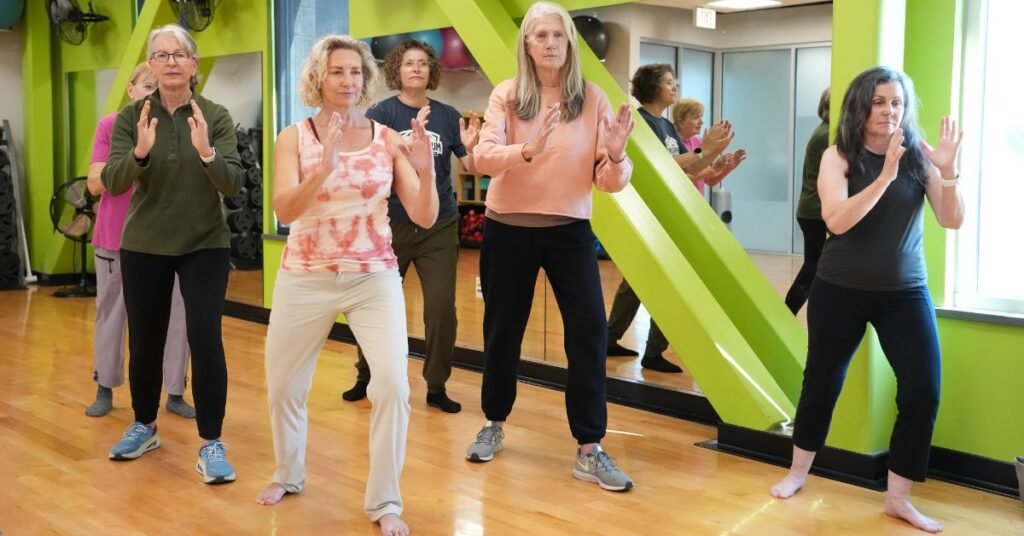
For many, exercise means speeding up. Run faster. Lift heavier. Do another set of reps. Push a little harder. Go a little further. Jennifer Pullman’s tai chi class at the Clyde Recreation Center, however, offers something different: A chance to slow down.
Pullman teaches an introductory, beginner-friendly tai chi class designed to welcome everyone from regular participants to first-time attendees. Rather than focusing on intensity, the class emphasizes deliberate movement, balance, breathing, and awareness of the body.
Tai chi originated in China as a martial art, but Pullman describes it as an “internal martial art.”
“Instead of using our energy for martial purposes like offense and defense, that energy is turned inward for the purpose of wellness, balance, and healing,” she said.
That makes tai chi look quite different from the martial arts many people may be familiar with. Movements are generally slow, controlled, and flowing, with an emphasis on maintaining balance and paying attention to what is happening in the body.
Most of Pullman’s class is practiced standing, although she sometimes incorporates stretching on the floor. One of tai chi’s advantages, however, is its adaptability. Participants can adjust the practice to their own abilities, and those who aren’t comfortable standing can practice from a chair.
“Tai chi is meant to be practiced at whatever level or condition you find yourself in,” Pullman said.
The atmosphere is intentionally calm as well. Pullman doesn’t use a microphone or play loud music during class. Rather than trying to tune out the body through distraction, participants are encouraged to pay attention to their physical sensations, emotions, and breathing. That slower approach can make tai chi a useful complement to other forms of exercise.
Pullman sees it as the other side of the fitness routines many people are accustomed to, like running, lifting weights, getting the heart pumping. Tai chi asks participants to work on a different set of skills.
“I think this is a really good and necessary counterpart to all of those Western exercises that we do,” she said.
Tai chi has become particularly popular among older adults because its gentle movements can help people work on balance and maintain range of motion without the impact associated with many other activities. Pullman said physical therapists will also recommend tai chi to people recovering from injuries, but she doesn’t see the practice as something reserved for a particular age or fitness level.
“I feel like it should be beneficial for everyone,” she said.
Pullman came to tai chi after years of practicing other martial arts. She spent about 15 years studying disciplines including taekwondo and judo before her interests gradually shifted toward tai chi. In many ways, she said, the transition felt natural.
Where her previous martial arts experience emphasized a different kind of physical discipline, tai chi offered a complementary practice. It eventually became something Pullman found valuable beyond its movements.
“I would say that it has taught me to slow down —and do slow down my mind more than anything else,” she said.”
For Pullman, the practice has helped create a little more space in her own reaction time, providing a chance to become more deliberate rather than immediately responding to whatever is happening around her.
That meditative side of tai chi is an important part of the class. Although participants learn physical movements and forms, progressing in tai chi doesn’t necessarily mean continually tackling harder and harder exercises. The fundamentals contain much of what Pullman wants her students to take away from the practice in the first place.
“We’re learning balance (and) we’re working on breathing,” she said. “That’s the purpose and the point of it.”
Students who continue practicing may eventually learn new forms or more difficult movements, but Pullman said the benefits she values, including slowing the mind and finding a greater sense of ease and peacefulness, are already present in the beginner movements.
That’s especially important for a recreation center class where newcomers regularly join experienced participants. Pullman keeps the class accessible enough that someone can walk in without previous tai chi experience and participate alongside people who have attended for some time.
And newcomers don’t need to worry about mastering every movement on their first attempt.
“You can’t do it wrong,” Pullman said. “If you show up, then you’re doing it right.”
Perhaps just as important as the movements themselves is the opportunity to practice them with other people. Pullman points to the simple social benefits of leaving the house, spending time with a group, and enjoying an activity together. She describes the regulars in her class as friendly and welcoming to newcomers.
In a fitness culture often built around doing more, going faster, and pushing harder, tai chi offers another approach. For an hour, the goal doesn’t have to be beating a personal record or adding another plate to the bar. Sometimes progress can mean slowing down, taking a breath, and simply paying attention to where you are.